Footballers rarely struggle for options when their playing days come to an end. Coaching, media work and business ventures are all well-trodden paths. But in recent years, a quieter shift has started to emerge off the pitch.
Some former players are moving into the world of luxury watches.
Not as ambassadors or brand faces, but as buyers, sellers and operators within the secondary market. It is a space that rewards knowledge, timing and an understanding of what people actually want to wear.
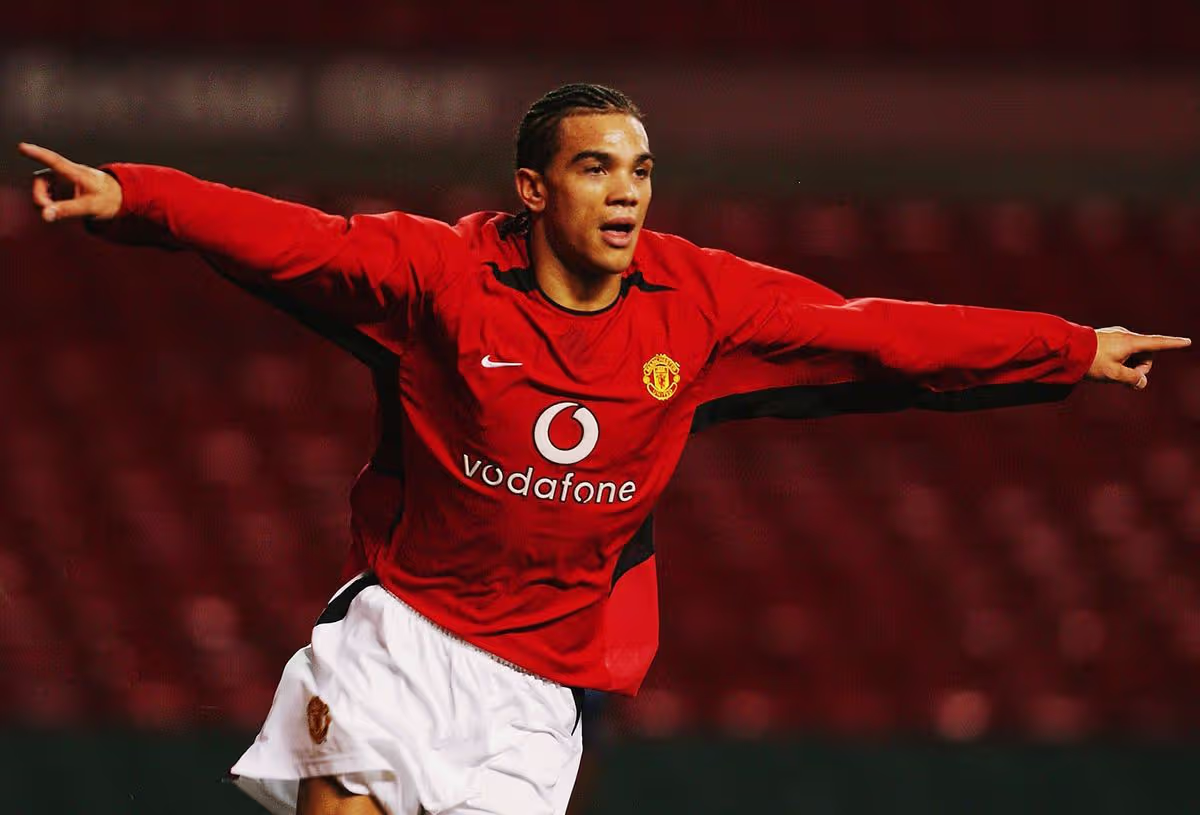
One example is Ramon Calliste, a former Manchester United and Liverpool youth player whose career was cut short through injury. Instead of stepping away from competition entirely, he redirected that same focus into building a business in the luxury watch market.
At first glance, it might seem like an unusual transition. But it reflects something bigger that has been happening over the past decade.
The luxury watch market has changed.
It is no longer just the domain of long-established collectors or industry insiders. A new wave of buyers has entered the space, driven by a mix of style, practicality and a growing awareness of value.
For athletes in particular, the appeal is obvious.
Watches are portable. They carry instant brand recognition. They are not tied to one place or one market. And unlike many other luxury purchases, they can hold their value when bought correctly.
That shift in thinking has fed directly into the growth of the pre-owned market.
Buyers are no longer focused solely on brand new releases. Instead, they are looking for watches that offer a stronger balance between price, design and long-term wearability. In many cases, that means turning to models that have already proven themselves.
This is where brands like TAG Heuer continue to stand out.
Known for their connection to motorsport and clean, functional design, TAG Heuer watches have remained consistently popular among buyers who want something versatile. They sit in a space that feels accessible without sacrificing heritage, making them an ideal entry point into luxury watches.
For those exploring the market, there is a wide range of TAG Heuer watches available, from everyday three-hand pieces through to chronographs that bring a more technical edge. The key difference in the pre-owned space is that buyers have more choice, often at a more considered price point.
That said, buying a watch is not just about the name on the dial.
The details matter.
Condition is everything. Original parts, service history and overall wear all play a role in long-term value. Box and papers are still important, particularly for those thinking ahead. And perhaps most importantly, where you buy from makes a difference.
Trust and transparency are what separate a good purchase from a poor one.
What stories like Calliste’s highlight is not just a career change, but a wider shift in how luxury watches are perceived. They are no longer just items of status. They are objects people take the time to understand.
The crossover between sport and watches feels natural once you look closer. Both reward precision, discipline and attention to detail. Both attract people who care about performance and longevity.
And as more people begin to approach watches with that mindset, the market continues to grow in a more informed direction.
For anyone considering their first step into luxury watches, the barrier to entry is lower than it seems. The key is not to chase trends, but to focus on pieces that make sense to wear and own over time.
That is where the real value lies.
Thank you to our partners for the 2025/26 season