
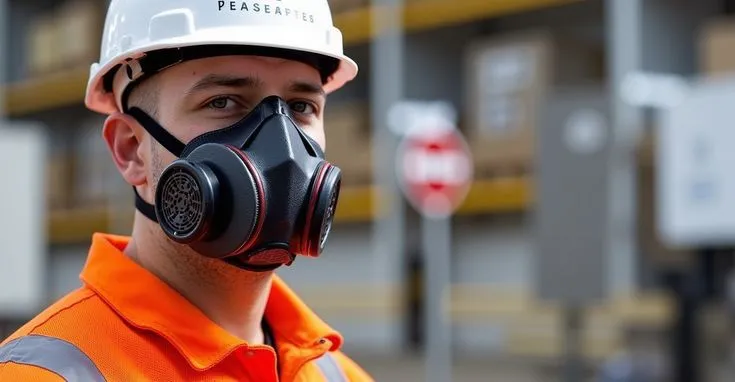
Respiratory protective equipment is used across construction, manufacturing, woodworking, engineering and other workplaces where employees may be exposed to airborne contaminants. Choosing suitable equipment is not simply a matter of selecting the mask with the highest-looking specification. The hazard, exposure level, duration of the task, facial fit and other PPE being worn all need to be considered.
The UK Health and Safety Executive (HSE) advises employers to select respiratory protective equipment as part of a wider risk-control approach and to ensure that it provides adequate protection for the individual wearer.
For longer or physically demanding tasks, comfort and ease of breathing can also influence whether RPE is worn correctly throughout the job.
Start with the Hazard, Not the Mask
Before choosing respiratory equipment, employers need to understand what workers may actually inhale. Fine dust produced by cutting or sanding creates a different risk from gases, vapours or an oxygen-deficient atmosphere.
This distinction matters because particulate filters are not designed for every type of airborne hazard. HSE guidance specifically notes that FFP1, FFP2 and FFP3 disposable respirators are intended to filter dust and should not be used in oxygen-deficient atmospheres or as protection against harmful gases and vapours.
A workplace assessment should therefore consider:
- The substance or contaminant involved
- How much may become airborne
- How long the employee is exposed
- Other control measures already in place
- Whether eye, head or hearing protection is also required
- The physical demands of the work
RPE should then be selected for that specific situation.
When Powered Respiratory Protection May Be Useful
A conventional filtering respirator relies on the wearer drawing air through the filter while breathing. In some working environments, a powered system may offer a more practical option.
A powered air purifying respirator uses a battery-powered fan to move filtered air towards the wearer’s breathing zone. Depending on the system, it may be paired with a hood, helmet or other suitable headtop. Protective Masks Direct lists powered systems designed for workplace applications and notes that loose-fitting hood configurations can also provide options where facial hair makes a tight face seal unsuitable.
Powered equipment can be particularly worth considering for longer tasks where the selected system provides the required level and type of protection.
However, powered does not automatically mean suitable. The correct filters, headtop, protection factor and system specification still need to match the workplace risk.
Fit Remains Critical with Tight-Fitting Equipment
Where respiratory equipment relies on a tight seal against the face, fit testing is important.
The HSE states that tight-fitting facepieces need to fit the individual wearer properly because leakage can reduce the protection provided. Workers who use more than one type of tight-fitting facepiece should be fit tested for each relevant type.
A successful fit test is not a permanent guarantee either. Employees still need to put the equipment on correctly and complete appropriate pre-use checks.
Changes such as significant weight loss, dental work or changes to the face may also affect fit and should be considered when reviewing RPE arrangements.
When a Reusable Respirator Makes Sense
For some regular tasks, disposable equipment may not be the only practical choice. A suitable reusable face mask can be cleaned and used again with compatible replaceable filters, provided that the manufacturer’s instructions are followed.
Reusable respirators are available in different configurations, including half-face and full-face models. Protective Masks Direct offers reusable respiratory equipment with filter options intended for different workplace requirements.
A reusable model may be useful where workers regularly encounter the same controlled hazard, but maintenance becomes particularly important.
Maintenance Should Be Part of the RPE Plan
Reusable and powered equipment requires more attention than simply putting it away after a shift.
A workplace routine may include:
- Inspecting seals, valves, straps and connections
- Checking filters and replacing them when required
- Cleaning equipment according to manufacturer instructions
- Checking battery condition on powered equipment
- Storing equipment away from contamination
- Recording maintenance where required
HSE guidance stresses that employers should ensure RPE is correctly selected, used, checked, maintained and stored.
A high-specification respirator that is damaged, poorly maintained or incorrectly worn cannot be assumed to provide its intended protection.
Consider Compatibility with Other PPE
Respiratory protection is rarely the only equipment used on an industrial site. Safety glasses, helmets, hearing protection and protective clothing may all be required at the same time.
These items should be checked together rather than separately. The arms of spectacles, for example, should not interfere with a face seal. Head protection should also remain correctly positioned when respiratory equipment is worn.
For tasks requiring several types of PPE, an integrated hood or powered headtop may sometimes simplify the arrangement, but suitability still depends on the risk assessment.
Conclusion
Choosing respiratory protection requires more than comparing filter classifications. Employers need to identify the hazard, determine the required protection, consider fit and comfort, and establish procedures for correct use and maintenance.
Disposable, reusable and powered systems each have roles in workplace respiratory protection. The most appropriate choice is the one that matches the actual exposure while remaining practical for employees to use correctly for the duration of the task.